
Milwaukee County CRC Overview
The Milwaukee County Community Reintegration Center, often called the CRC, is the county facility in Franklin that was formerly known as the House of Correction. Milwaukee County describes it as the largest county correctional facility in Wisconsin. It operates as a secure county house of correction for adult men and women, with a stronger focus on sentenced custody, reentry, family support, programming, and work-program style custody than the downtown Criminal Justice Facility.
The CRC is not a Wisconsin DOC prison. It is also not a federal or ICE facility. Current custody lookup still starts with the Milwaukee County Sheriff's In Custody Locator because the CRC is part of county custody. A person sentenced to state prison or placed in DOC supervision custody must be searched through the Wisconsin DOC Offender Locator instead. That distinction is important because the CRC may hold county-sentenced residents and people from other jurisdictions, while DOC facilities inside Milwaukee County hold persons in state care.
CRC Capacity and Population
Milwaukee County lists the CRC's maximum capacity as 1,766 beds. A 2025 PREA audit reported the same capacity, a 12-month average daily population of 1,133, and a day-one onsite population of 1,392. The audit described the resident age range as 18 to 74 and included men and women. It also reported no over-capacity finding in the prior 12 months. A separate county facility master plan reference listed 978 residents on Nov. 12, 2023 and a 2023 average daily population of 978.5.
Those numbers show why the CRC should not be treated as a small work-release annex. It is a major Milwaukee County custody site with its own family services, visiting process, commissary rules, and resident support structure. The CRC's population may shift as court sentences, transfers, sanctions, work program placements, and reentry needs change. For a live person search, use the current locator and direct phone contacts rather than relying on a dated population figure.
Search Milwaukee County CRC Custody
The correct public starting point for a CRC resident is the Milwaukee County Sheriff In Custody Locator. Search by last name first, then narrow with first name, gender, or year of birth. A result can show county facility fields, custody date, booking identifiers, court date, charges, holds, and bond information when available. Because the CRC is a county facility, the county locator is the right first search. The Wisconsin DOC locator is used only after the person is in DOC custody or supervision status.
- Search the county In Custody Locator by last name.
- Open the matching occupant detail rather than relying on the results grid alone.
- Check the facility field and custody details for a CRC placement or county custody clue.
- Call CRC family services or Jail Records if the online result is incomplete or urgent.
The image below shows the official overview, family services, deposit paths, and hot food information from the Milwaukee County Community Reintegration Center page.
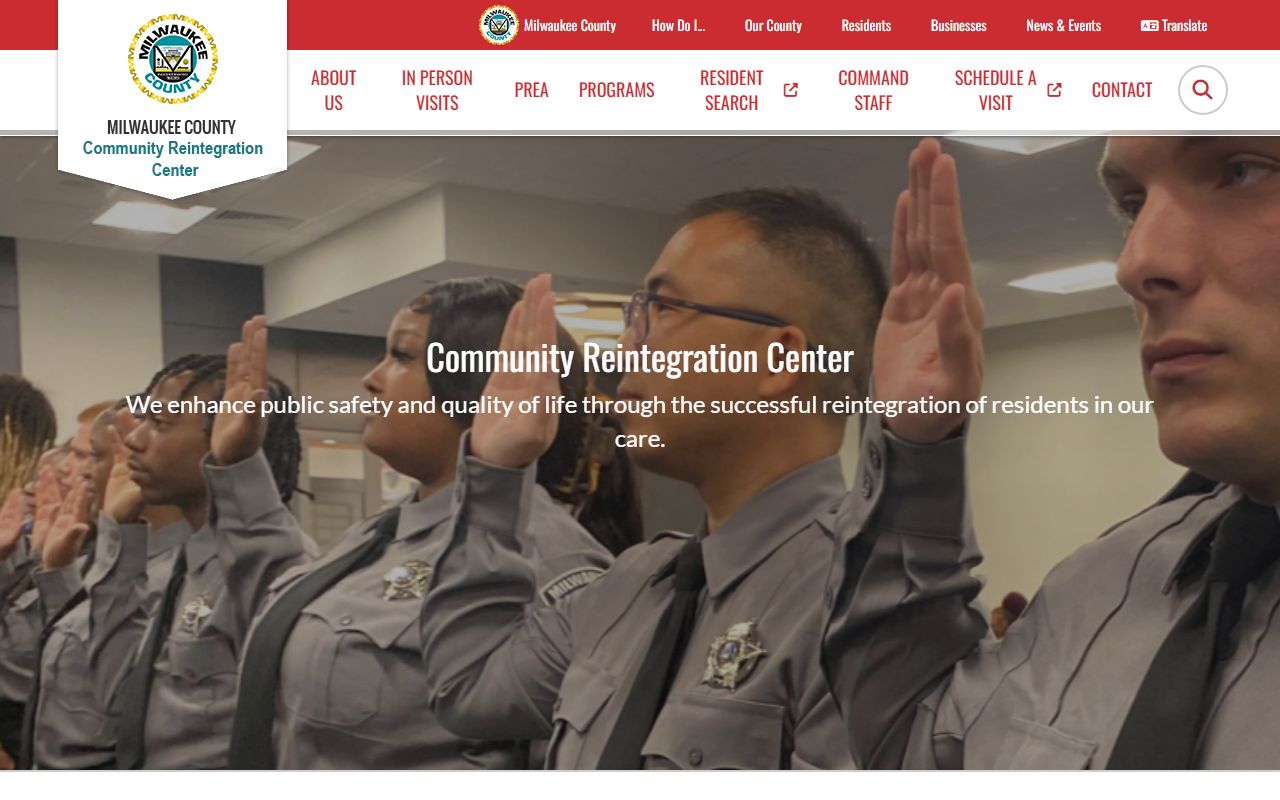
The CRC source page is useful because it separates resident support and county house-of-correction services from the downtown jail's booking and records counter.
Milwaukee County CRC Contact
The CRC is located in Franklin rather than the downtown courthouse complex. Family members may check on a resident by calling the CRC family services number listed in county materials. General facility questions go through the main CRC number. Bail for a CRC resident is still processed at the Criminal Justice Facility G-level Jail Records Office, because Milwaukee County directs bail posting there even when the person is housed at the CRC or another county facility.
Milwaukee County Community Reintegration Center
8885 S. 68th Street
Franklin, WI 53132
(414) 427-4700
County secure correctional facility.
CRC Family Services
Resident status and family questions
Milwaukee County CRC
(414) 427-4782
Use when the county locator does not answer a family-status question.
Milwaukee County CRC Visiting
CRC in-person visits are scheduled through ICSolutions. Milwaukee County says visits must be scheduled at least 24 hours in advance and no more than one week ahead. Visits are 30 minutes, and the maximum visit group is two adults and two children. The published weekend window runs from 7:00 a.m. to 7:00 p.m., with the last visit at 6:30 p.m. Visitors should confirm approval, identity requirements, and the resident's housing or discipline status before traveling.
The CRC in-person visits page shows the ICSolutions scheduling path and weekend visit rules.
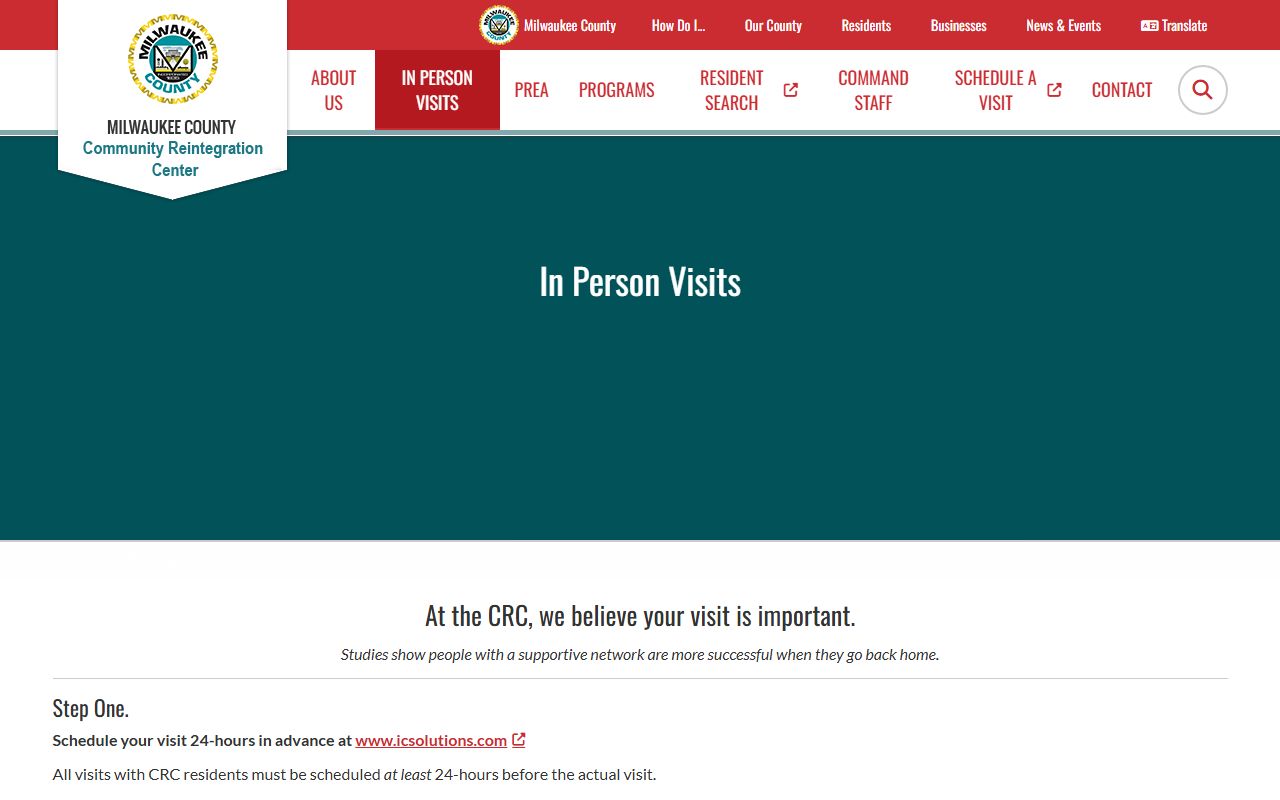
The screenshot supports the schedule table because CRC visits use a different process from the downtown jail's offsite video visits.
| Day | Hours | Type |
|---|---|---|
| Saturday | 7:00 a.m.-7:00 p.m.; last visit 6:30 p.m. | In-person, scheduled through ICSolutions |
| Sunday | 7:00 a.m.-7:00 p.m.; last visit 6:30 p.m. | In-person, scheduled through ICSolutions |
| Weekdays | No regular public window listed | Confirm with CRC before planning |
CRC Money, Phone, and Food
CRC money deposits use Access Corrections online, phone deposits at (866) 345-1884, lobby kiosks at the Criminal Justice Facility or CRC, and CashPayToday retailers. Milwaukee County states that the daily commissary limit is $300 and deposits can take 24 hours. Service fees may apply depending on the method. Family should confirm the resident is still in CRC custody before depositing funds, because a transfer can change the available account path.
CRC has a locally specific hot food program, Trinity Takeout. Research notes that orders are allowed twice weekly, that dorm-specific order days are published, and that discipline or high-custody housing residents are not eligible. The program is not a substitute for commissary deposits. It is a separate family food-order option tied to the resident's unit and eligibility status.
| Service | CRC Detail |
|---|---|
| Money deposits | Access Corrections, phone, lobby kiosks, or CashPayToday retailers. |
| Daily commissary limit | $300, with deposits possibly taking 24 hours. |
| Family check-in | Call (414) 427-4782 for resident family services. |
| Hot food | Trinity Takeout, with eligibility and dorm schedule limits. |
CRC Intake and Reentry Custody
The CRC's role is tied to county sentences, reintegration, family support, work-program style custody, and secure housing outside the downtown jail. It may house people sentenced in Milwaukee County and other jurisdictions, plus residents in reentry settings. Intake and placement should be understood as county custody management, not street-arrest central booking. New arrests normally move first through the downtown Criminal Justice Facility, where central booking, identity checks, booking photos, and initial records are created.
The county's CRC materials emphasize accreditation by the National Commission on Correctional Health Care and resident services. Health accreditation is relevant because people housed at the CRC remain in secure custody while still needing medical, mental-health, family, reentry, and basic communication support. The custody record can say where the person is housed, but direct CRC contacts are often needed for family-service questions that do not appear in a public search result.
About CRC Inmate Records
CRC records connect to the broader Milwaukee County jail system. A current occupant may appear through the county In Custody Locator, while older booking records, booking photos, incident records, or related Sheriff's Office records may require a public-records request. The CRC's status as a county correctional facility means the public should not use the DOC locator as the first search unless the person has moved into DOC custody or supervision.
Bail can still route through the downtown jail records office. Court case status still routes through WCCA or the Milwaukee County Clerk of Circuit Court. The CRC answers where a resident is housed and how family support, visits, deposits, and food orders work at that county facility. Those roles overlap, but they are not the same record system.
Note: Confirm a CRC resident's custody status before visits, deposits, or Trinity Takeout orders because transfers can change eligibility.